

Is there a budget?
First, the inevitable: the budget. Ergonomic office chairs are usually noticeably more expensive than standard furniture store models. The bottom line is, they'll still cost you significantly less than the standard ones. How is that possible? Well, there are two main reasons:
First of all, it should be noted that a good ergonomic office chair from an established brand has such high build quality that it will simply last significantly longer than a run-of-the-mill chair. It's advisable to take a look at the company's reputation, check the warranty period, and pay attention to how the manufacturer handles spare parts.
Secondly, a good ergonomic office chair doesn't compromise your quality of life — quite the opposite. That may sound a bit pathetic, but considering back pain is the number one health problem, it's no exaggeration. With the right chair, you'll save yourself pain, stress, and, above all, doctor visits and physical therapy.
Therefore, a one-time, larger investment in a high-quality chair can actually be the cheaper option in the long run. That said, your choice of chair should still be based on your financial means. Therefore, it's best to be clear about your budget before you start looking for a chair.

What are your activities?
Of course, the right type of chair will vary depending on the professional or personal activities you need it for. The general rule of thumb is: the more time you spend on the chair each day, the more ergonomic it should be.
Sitting for long periods of time is many things, but it's certainly not good for your health. That's why it's all the more important to have appropriate support for your back, shoulders, and neck when sitting for several hours a day. For traditional desk work, a lumbar support is essential (I'll explain what this means in point 6). Apart from that, any form of ergonomic support is welcome and can compensate for many disadvantages.
However, if you only use the chair for short periods of time, perhaps in a desk-sharing arrangement, it may make sense to forgo some of the adjustment options. The health impact is naturally lower with shorter periods of use, and more features tend to be more expensive. If you share the chair with many colleagues, an automatic chair may also be a good option. These chairs, as the name suggests, automatically adjust to your needs with just a few simple movements. This saves you the hassle of adjusting the settings every time you change chairs and ensures smooth transitions.
Weight and size
In most cases, your height and weight aren't the most important factor when choosing an office chair. However, if you're heavier or taller, there's a chance that some chairs will cause you problems rather than avoid them.
Most chairs have a maximum weight limit, and you shouldn't exceed this limit. Especially at weights over 100 kilograms, some chairs may not be able to withstand the load over time. So, be sure to thoroughly research the maximum weight limit for your chosen chair before purchasing.
Even if you're taller or shorter than average, it's important to keep this in mind when choosing the right office chair. Office chairs are manufactured according to standards, which can often cause physical problems for people who are significantly above average. But don't worry, there are special configurations for these cases too. If you're over 1.85 meters tall or under 1.60 meters tall, it might be worth looking for a chair specifically for tall or short people. Generally, though, you'll find one quickly.

Health restrictions or pre-existing conditions?
If you have any health restrictions or pre-existing conditions, you should consult with your doctor, orthopedic surgeon, or physiotherapist before you begin your search for a suitable chair. They are best versed in your specific problem and likely already have experience with suitable economic chairs. Some are specifically designed for certain health problems and can make a valuable contribution to alleviating and preventing them.
In most cases, however, minor complaints such as tension and back pain are caused by spending too long working on unsuitable or poorly adjusted chairs. Switching to a well-adjusted, ergonomic office chair can work wonders.
Office chair for hard or soft floors?
There are typically two types of casters for office chairs: hard and soft. You can easily determine which ones are right for you by examining the surface you plan to use the chair on.
These days, almost all chairs come standard with soft casters. These casters are designed to roll easily over hard floors without scratching them. Examples of hard floors include parquet, laminate, tiles, and the like. However, they are also suitable for slightly soft floors, as long as they don't give in too much. With the exception of very rough and dense carpets or particularly soft surfaces such as deep pile, they are suitable for almost any surface.
However, if you plan to use the chair on one of these extremely soft floor types, you'll likely have problems with soft casters. In most cases, they won't roll properly on such surfaces or will even get stuck. In this case, you should opt for hard casters.

The lumbar support
No area of the body is affected more by prolonged sitting than the lower back. Back pain is the number one health problem in Germany, and for good reason. Sitting for long periods, especially on uncomfortable or unsuitable chairs, practically invites poor posture. Especially when you're focused on your work, in most cases you hardly notice if your posture changes, or it can be very difficult to maintain the correct posture. Incorrect posture will sooner or later lead to severe tension and therefore pain. In the worst case, long-term incorrect strain can have more serious consequences.
To avoid the associated pain and doctor's visits, I strongly recommend a lumbar support. Lordosis refers to the forward curvature of the lower spine, and appropriate support helps prevent poor posture. This usually involves a particularly rigid part of the backrest. There are dozens of different models and approaches to the problem. Some utilize a hardened section of a rigid backrest or simply curve it slightly, others offer adjustable support in the affected area, while some feature complex, multi-part designs that can be adjusted down to the smallest detail.
Lumbar support becomes even more important the longer you spend in a chair. The complexity of the lumbar support should increase with this assessment. However, it is generally highly recommended for desk work.
With or without headrest?
While a headrest is included with some office chairs, it's by no means a common feature, especially since it usually comes with a significant surcharge. Therefore, it makes sense to consider the advantages and disadvantages of a headrest.
Whether a headrest is right for you is difficult to say, as it ultimately comes down to personal preference. Comfort is the most important factor, as for some people, a headrest simply doesn't fit or sometimes simply doesn't feel comfortable. For others, however, it's an indispensable feature when it comes to seating comfort.
Reaching for a headrest can be beneficial if you spend long periods of time looking at a screen or smartphone each day. Over time, this typically leads to shoulder and neck pain, such as tension headaches. If you suffer from these, a headrest can help maintain a healthy posture and alleviate pain, as well as prevent it in the long term.
However, a headrest also somewhat restricts your freedom of movement in the chair. Especially if you move around a lot in the chair, it can be in the way, or it may only be of limited use, since you rarely sit in a resting position, which is necessary to truly notice the positive effects of neck support.

What kind of armrest?
There are a few things to consider when choosing the right armrests. First, there are four basic types of armrests, ranging from 1D to 4D. The 'D' stands for 'dimension' and simply indicates how many different adjustment options the armrest has.
1D: This is the minimum requirement, but not all chairs meet it: height adjustability. An armrest must be height-adjustable to allow a 90° angle at the elbow. This is the only way to provide ideal relief for the arm and shoulder.
2D: In addition to being height-adjustable, the 2D armrest is also adjustable in width, i.e., its distance from the seat. I recommend at least one 2D armrest, if possible, to ensure adequate relief of the shoulder and neck area. Your arms should rest flat on the armrests, meaning they should be set at shoulder width.
3D: In addition to the basic functions of the 2D armrest, the 3D armrest offers an additional function. This one is not fixed however since it can refer to an insertion forward, backward, or even inward.
4D: With 4D armrests, each axis can be adjusted separately, and the angle of the armrest relative to the seat shell can also be adjusted. This can be important, for example, when working on a smartphone.
If your working posture changes frequently, an armrest with more adjustable dimensions might make sense. Generally speaking, for good posture at your desk, your stomach should reach the edge of the desk before the armrests; otherwise, you'll have to bend forward to work, putting yourself in an unhealthy posture. Shorter armrests are therefore the better choice in most cases.
Does the material have to be flame-retardant?
Depending on the regulations at your workplace, you may be required to adhere to certain fire safety regulations and DIN standards when choosing your office chair. Either way, you should familiarize yourself with the applicable local regulations before purchasing an office chair and, if necessary, contact the fire safety officer with any questions. Depending on the regulations, you may have more or less difficulty finding a suitable chair. In principle, however, ergonomic office chairs can be found that meet every requirement and regulation.
Does the fabric have to meet a abrasion class?
You've probably come across the terms 'abrasion rating' or 'abrasion cycles' while searching for an office chair or other pieces of furniture. The abrasion rating simply refers to a specific number of abrasion cycles, so the terms can largely be used synonymously.
The more abrasion cycles a fabric has, the less susceptible it is to friction and wear on its surfaces. To determine the number of abrasion cycles, a test called the Martindale test is used. Named after its inventor, this test tests a fabric's durability through thousands of mechanical abrasion cycles. Of course, all of this is still somewhat abstract, because what exactly do 10,000 abrasion cycles mean for my office chair?
Well, that's the abrasion resistance rating at which a piece of furniture is suitable for everyday use. However, that doesn't mean it should be a benchmark when looking for an office chair. Depending on how the chair is used, it should have a much higher abrasion rating. For occasional private use, chairs with a abrasion rating of 15,000 or more are suitable. However, if you need the office chair for several hours of sitting per workday, or even share it with others, it should have a abrasion rating of at least 25,000. This way, you can be sure that you won't have to replace the upholstery of your new chair after just a short time.

Mesh back or fabric back?
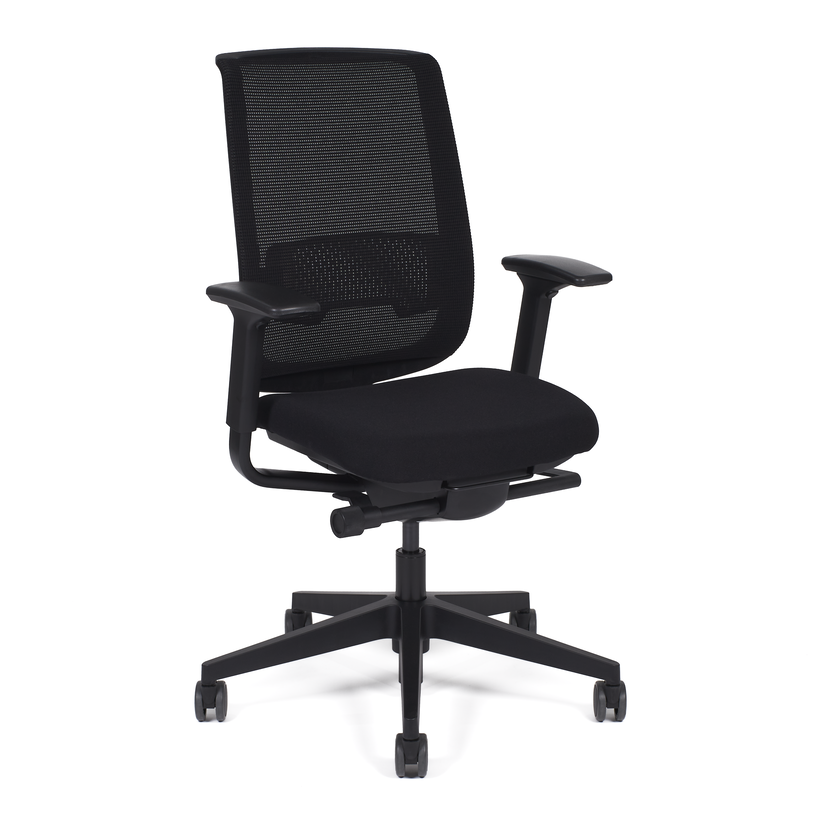
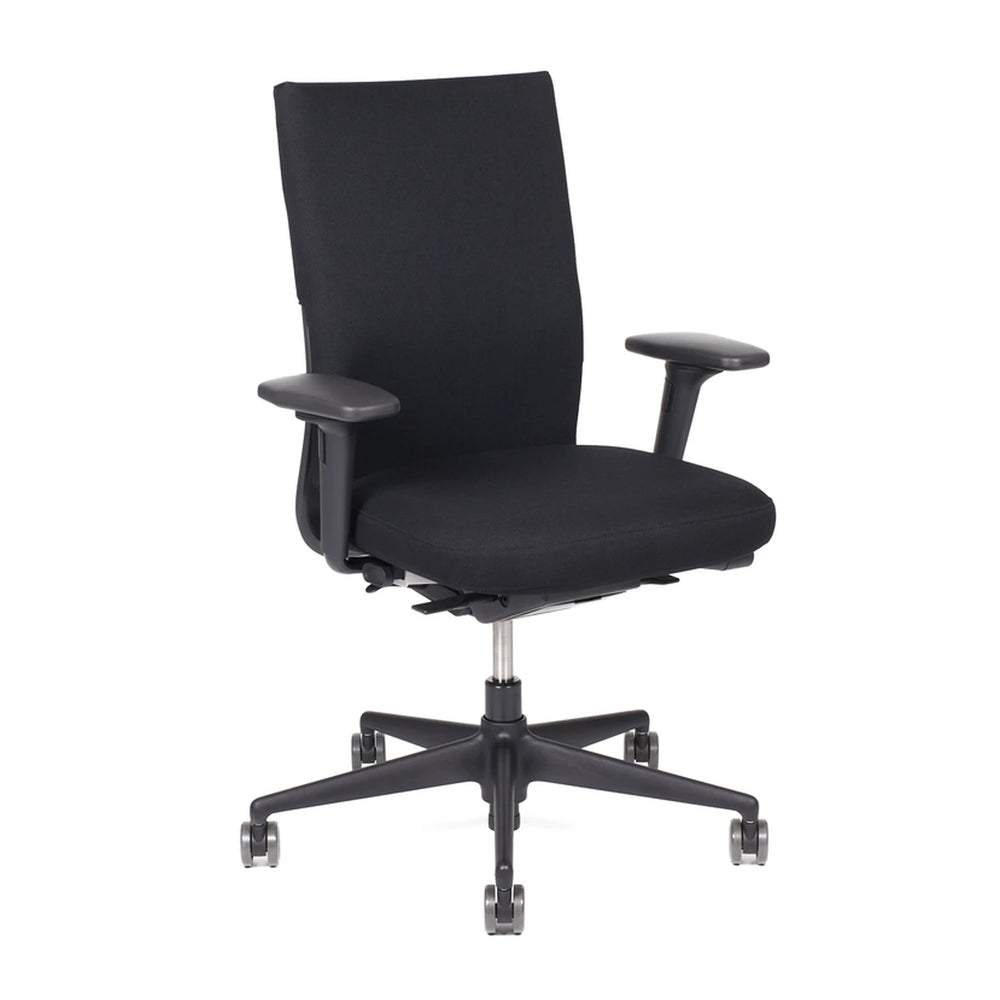
Broadly speaking, office chair covers fall into two categories: fabric or upholstered backs, and mesh backs. It's not possible to single out one type with the most advantages. Rather, it depends on personal preference regarding the various features, which is why I'll list them for you.
Mesh chairs are very trendy at the moment. They have a sportier look and offer several advantages over traditional fabric backs. The most important is ventilation. It can get warm on an upholstered chair, especially during a long workday. Sweating on an upholstered chair can be a problem, especially in summer. The open mesh back, on the other hand, cools the body, preventing heat build-up and thus reducing sweating in the workplace. Mesh chairs are also lighter and easier to clean. Dirt can usually be easily wiped away, which isn't always so easy with upholstered chairs.
However, a mesh backrest also has disadvantages. Especially in terms of comfort and durability, it often can't keep up with an upholstered backrest. The softer surface of an upholstered backrest is still the most comfortable option. Good padding supports you and, with a comfortable backrest feel, provides a greater degree of relaxation than would be the case with the usually more rigid mesh backrests. An upholstered backrest also outperforms a mesh backrest in terms of durability. If you take proper care of the surfaces, a good upholstered chair will be a companion for decades.
Negative seat tilt desired?
A negative seat tilt simply means that the seat of an office chair is tilted slightly forward, meaning it slopes toward the feet. This might sound counterintuitive at first, since you want to sit firmly in the chair and not slip off.
First of all, if you feel like you have to push back with your feet to avoid sliding off the chair, then the incline is too steep. If this is the case, you need to reduce the seat angle slightly or choose a different chair.
If that's not the case, a negative seat tilt can offer several benefits. First, it opens the hips forward, which helps prevent a hollow back and relieves pressure on the lower back. Second, this opening also helps you adopt and maintain an upright posture. Feel free to give it a try and you'll notice that sitting upright becomes easier.
However, not all office chairs come with this type of negative tilt, and it's important to note that, despite its advantages, it's not a requirement for ergonomic sitting. However, it can make a valuable contribution.

Do you want a sliding seat?
The seat of an office chair should be long enough to allow a hand's width of space between the end of the seat and the back of your knee. This is necessary to ensure good blood flow to the legs. If this is obstructed, it can lead to serious long-term problems.
However, not every seat is perfectly adjusted to your needs right from the start, which is why we have the sliding seat. This can help you maintain an upright posture and, when adjusted correctly, ensures good blood flow to both legs.
If you're of average height, most ergonomic office chairs will be roughly standardized to fit you. Generally speaking, most high-end office chairs now have a sliding function. If this isn't the case, it's worth trying out the chair first.